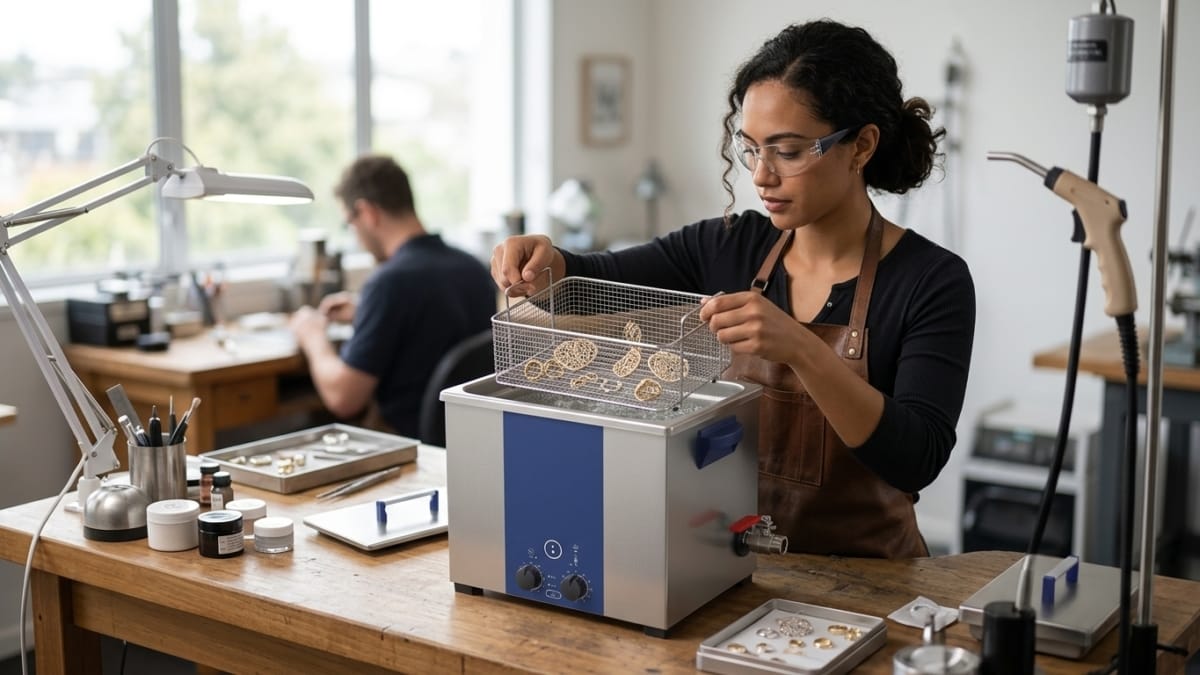
In an Auckland jewellery workshop, a technician carefully places a tray of gold rings into an ultrasonic cleaner. Within minutes, the rings emerge sparkling, free of tarnish and grime. Across town, a dental practice uses a similar device to clean intricate surgical tools, ensuring hygiene standards are met. Ultrasonic cleaners are indispensable in New Zealand’s workshops, labs, and medical facilities, offering precision cleaning for delicate and complex items.
At Elma Ultrasonics NZ, we’ve been supplying German-engineered ultrasonic cleaners since 1979. Whether you’re cleaning jewellery, laboratory glassware, or automotive parts, our range caters to diverse applications with unmatched reliability and efficiency.
How Ultrasonic Cleaners Work
Ultrasonic cleaners use high-frequency sound waves, typically between 20–120 kHz, to create microscopic bubbles in a cleaning solution. This process, known as cavitation, scrubs contaminants from surfaces without damaging delicate items. The bubbles reach into intricate designs, tight corners, and hard-to-access areas, making ultrasonic cleaning ideal for jewellery, medical tools, and industrial components.
Choosing the Right Ultrasonic Cleaner
Tank Size and Capacity
Tank size is a critical factor. Small tanks (0.5–2 L), like the Elmasonic EASY 10H, are perfect for jewellery and dental tools. Medium tanks (2–10 L), such as the Elmasonic EASY 60H, suit workshops and labs. For heavy-duty industrial cleaning, larger tanks (10 L+) like the Elmasonic X-tra 300 are recommended.
Frequency (kHz)
Lower frequencies (25–40 kHz) are aggressive, ideal for removing grease and grime from automotive parts. Higher frequencies (80–120 kHz) are gentler, suitable for delicate items like pounamu (greenstone) or optical lenses. The Elmasonic P series offers dual-frequency operation for versatility.
Heating Function
Heated ultrasonic cleaners, such as the Elmasonic EASY 100H, enhance cleaning by loosening stubborn contaminants. Adjustable temperatures (30–80°C) optimise results for grease, oil, and biological residues.
Applications Across Industries
Jewellery Cleaning
Ultrasonic cleaners restore jewellery’s shine by removing dirt and tarnish from intricate designs. Pair your cleaner with Super Clean, a mild solution for gold, silver, and hard stones. For soft stones like turquoise or amber, use the 80 kHz setting on the P series.
Medical and Dental Tools
In healthcare, ultrasonic cleaners ensure surgical instruments are free of contaminants. The Elmasonic MED series is specifically designed for sterilisation preparation, meeting NZ hygiene standards.
Industrial and Automotive Parts
For workshops handling greasy engine components or marine parts, the Elmasonic X-tra ST series offers robust cleaning with dual-frequency operation and dynamic modes for stubborn contaminants.
Accessories and Solutions
Enhance your cleaning process with accessories like stainless steel baskets and beaker positioning covers. For optimal results, use specialised cleaning solutions such as Tec Clean A4 for industrial grease or Super Clean for jewellery.
FAQs
Frequently asked questions
Can I clean jewellery with an ultrasonic cleaner?
What frequency is best for ultrasonic cleaning?
Do ultrasonic cleaners require special solutions?
Can I use an ultrasonic cleaner for medical tools?
What size tank do I need for ultrasonic cleaning?

For nearly 38 years, Tim Fastnedge has been a driving force behind Techspan’s expertise in ultrasonic cleaning equipment. His knowledge of ultrasonic cleaners is extensive, allowing him to recommend the most effective cleaning solution for any application.
Tim’s dedication extends beyond sales; he’s passionate about empowering customers with the right tools to achieve optimal cleaning results. So when it comes to Elma Ultrasonics New Zealand’s range of high-quality equipment, look no further than Tim’s expertise at Techspan.