How Ultrasonic Cleaning Works: A Guide for NZ Buyers
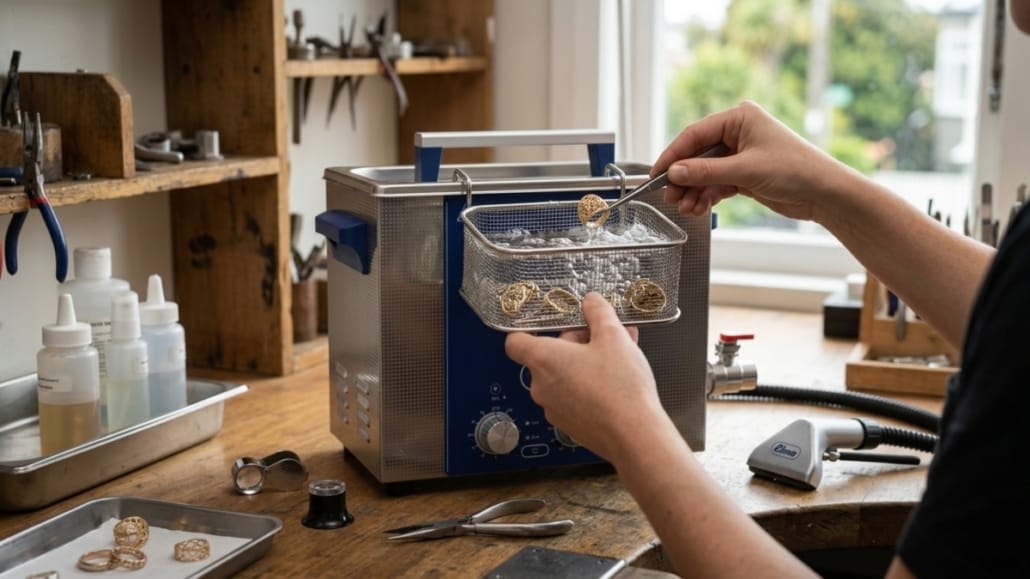
In an Auckland jewellery workshop, a gold ring tarnished by years of wear is restored to brilliance in just minutes. Across town, a dental practice uses ultrasonic cleaning to prepare instruments for sterilisation, ensuring patient safety. Meanwhile, a laboratory in Christchurch relies on ultrasonic cleaning machines to remove contaminants from delicate glassware. These scenarios highlight the versatility and effectiveness of ultrasonic cleaning, a technology trusted by New Zealand businesses for over four decades.
But how does ultrasonic cleaning work, and what makes it so effective? In this guide, we’ll break down the science, explore the role of ultrasonic cleaning solutions, and help you choose the right ultrasonic cleaning machine for your needs.
What Is Ultrasonic Cleaning?
Ultrasonic cleaning is a process that uses high-frequency sound waves to create microscopic bubbles in a liquid cleaning solution. This phenomenon, known as cavitation, generates a powerful scrubbing action that removes dirt, grease, and contaminants from surfaces, even in hard-to-reach areas. It’s a non-destructive method, making it ideal for delicate items like jewellery, medical instruments, and electronics.
Elma ultrasonic cleaners, manufactured in Singen, Germany since 1948, are renowned for their precision and reliability. Distributed in New Zealand by Techspan since 1979, these machines are a staple in workshops, labs, and clinics nationwide.
How Does Ultrasonic Cleaning Work?
The Science of Cavitation
When an ultrasonic cleaning machine operates, it sends high-frequency sound waves (typically 20–120 kHz) through a liquid. These sound waves create alternating high- and low-pressure zones, forming tiny bubbles in the cleaning solution. As the bubbles collapse, they release energy that dislodges contaminants from surfaces.
The Role of Ultrasonic Cleaning Solutions
While water alone can be used, adding an ultrasonic cleaning solution optimises the process. These solutions are formulated to target specific contaminants, such as grease, rust, or biological residues. For example, Super Clean is ideal for jewellery, while Tec Clean A4 tackles industrial grease and oils.
Choosing the Right Ultrasonic Cleaning Machine
Key Factors to Consider
- Tank Size: Choose a tank 20% larger than your largest item. For example, the Elmasonic EASY 30H (2.75 L) suits small jewellery, while the Elmasonic X-tra ST 500H (50 L) is ideal for industrial parts.
- Frequency: Lower frequencies (25–40 kHz) are more aggressive, suitable for heavy-duty cleaning. Higher frequencies (80–120 kHz) are gentler, perfect for delicate items like pounamu or optical lenses.
- Heating: Heated models, such as the Elmasonic EASY 100H, improve cleaning efficiency by loosening stubborn contaminants.
Applications in New Zealand
Ultrasonic cleaning is widely used across industries in NZ:
- Jewellery: Remove tarnish and brighten metals with solutions like Super Clean.
- Medical/Dental: Sterilise instruments to meet hygiene standards.
- Industrial: Degrease automotive and marine components.
- Laboratory: Clean glassware and precision instruments.
FAQs
Frequently asked questions
What is ultrasonic cleaning?
What is the best ultrasonic cleaning solution for jewellery?
Can I clean medical instruments with an ultrasonic cleaner?
What size ultrasonic cleaner do I need?
Do ultrasonic cleaners work with plain water?

For nearly 38 years, Tim Fastnedge has been a driving force behind Techspan’s expertise in ultrasonic cleaning equipment. His knowledge of ultrasonic cleaners is extensive, allowing him to recommend the most effective cleaning solution for any application.
Tim’s dedication extends beyond sales; he’s passionate about empowering customers with the right tools to achieve optimal cleaning results. So when it comes to Elma Ultrasonics New Zealand’s range of high-quality equipment, look no further than Tim’s expertise at Techspan.