How Does an Ultrasonic Cleaner Work? A Guide for NZ Trade Buyers
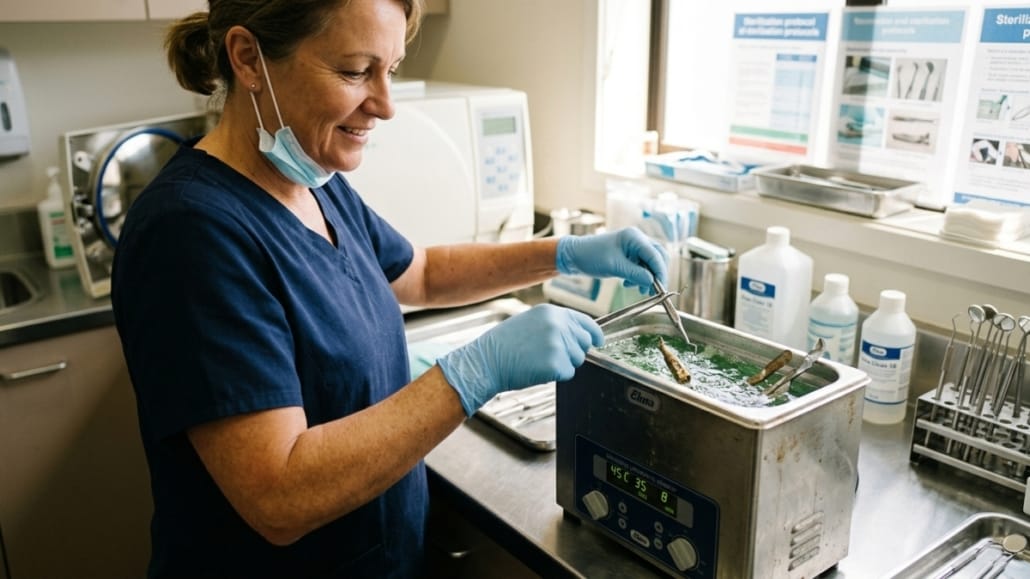
In an Auckland dental practice, sterilising tools is a daily necessity. The team relies on an ultrasonic cleaner to remove debris and prepare instruments for autoclaving. Across town, a jeweller uses a similar device to restore the shine of intricate gold rings and pounamu pendants. These machines, trusted by New Zealand businesses for decades, deliver precision cleaning without manual scrubbing.
But how does an ultrasonic cleaner work? Whether you’re in a workshop, laboratory, or jewellery studio, understanding the mechanics behind ultrasonic cleaning can help you optimise your processes and choose the right equipment for your needs.
What is Ultrasonic Cleaning?
Ultrasonic cleaning is a process that uses high-frequency sound waves, typically between 25 kHz and 80 kHz, to clean items submerged in a liquid solution. The sound waves create microscopic bubbles in the liquid through a phenomenon called cavitation. These bubbles rapidly form and collapse, producing a scrubbing action that removes dirt, grease, and contaminants from surfaces, including hard-to-reach areas.
This method is particularly effective for cleaning delicate or intricate items, such as jewellery, medical instruments, and electronic components, without causing damage.
How Does an Ultrasonic Cleaner Work?
The Components of an Ultrasonic Cleaner
An ultrasonic cleaner consists of several key components:
- Ultrasonic transducers: These devices convert electrical energy into high-frequency sound waves.
- Tank: Made of stainless steel, the tank holds the cleaning solution and the items to be cleaned.
- Generator: Provides the electrical energy needed to power the transducers.
- Heating element: Found in heated models, it warms the cleaning solution to enhance cleaning efficiency.
The Cleaning Process
When the ultrasonic cleaner is activated, the transducers generate sound waves that travel through the cleaning solution. These waves create cavitation bubbles, which implode upon contact with the surface of the items being cleaned. The implosion dislodges contaminants, leaving the items clean and free of debris.
For example, the Elmasonic EASY 100H, operating at 37 kHz, is ideal for cleaning jewellery and optical lenses. Its heated tank, adjustable between 30°C and 80°C, further enhances the cleaning process by loosening stubborn residues.
Choosing the Right Ultrasonic Cleaner
Tank Size and Capacity
The size of the tank determines the maximum dimensions of items you can clean. For small items like rings or dental tools, a compact model such as the Elmasonic EASY 30H with a 2.75-litre capacity is sufficient. For larger items or higher volumes, consider industrial models like the Elmasonic X-tra 300, which offers a 30-litre tank.
Frequency
The frequency of the sound waves affects the cleaning intensity:
- 25–40 kHz: Suitable for heavy-duty cleaning tasks, such as removing grease from automotive parts.
- 40–80 kHz: Balanced for general cleaning applications, including jewellery and optical lenses.
- 80 kHz and above: Ideal for delicate items like pounamu and electronics.
The Elmasonic P series offers dual-frequency operation at 37 kHz and 80 kHz, making it versatile for both coarse and fine cleaning.
Cleaning Solution
The choice of cleaning solution is crucial. Aqueous-based solutions, such as Super Clean, are safe and effective for jewellery and hard stones. For industrial applications, consider Tec Clean A4, designed to tackle grease and oils.
FAQs
Can I clean pounamu (greenstone) in an ultrasonic cleaner?
Yes, but use room-temperature water and avoid prolonged cycles to prevent damage.
Do ultrasonic cleaners use a lot of electricity?
No, they are energy-efficient and typically consume less power than other cleaning methods.
Is hot or cold water better for ultrasonic cleaning?
Warm water is generally better, as it enhances the cleaning process. Avoid water that is too hot, as it can damage certain items.
What is cavitation?
Cavitation is the formation and collapse of microscopic bubbles in a liquid, caused by high-frequency sound waves. This process dislodges contaminants from surfaces.
How do I choose the right ultrasonic cleaner for my needs?
Consider the size of the items you need to clean, the type of contaminants, and the frequency required. For personalised advice, contact us or explore our range of Elmasonic P series cleaners.
Frequently asked questions
Can I clean pounamu (greenstone) in an ultrasonic cleaner?
Do ultrasonic cleaners use a lot of electricity?
Is hot or cold water better for ultrasonic cleaning?
What is cavitation in ultrasonic cleaning?
How do I choose the right ultrasonic cleaner for my needs?

For nearly 38 years, Tim Fastnedge has been a driving force behind Techspan’s expertise in ultrasonic cleaning equipment. His knowledge of ultrasonic cleaners is extensive, allowing him to recommend the most effective cleaning solution for any application.
Tim’s dedication extends beyond sales; he’s passionate about empowering customers with the right tools to achieve optimal cleaning results. So when it comes to Elma Ultrasonics New Zealand’s range of high-quality equipment, look no further than Tim’s expertise at Techspan.